
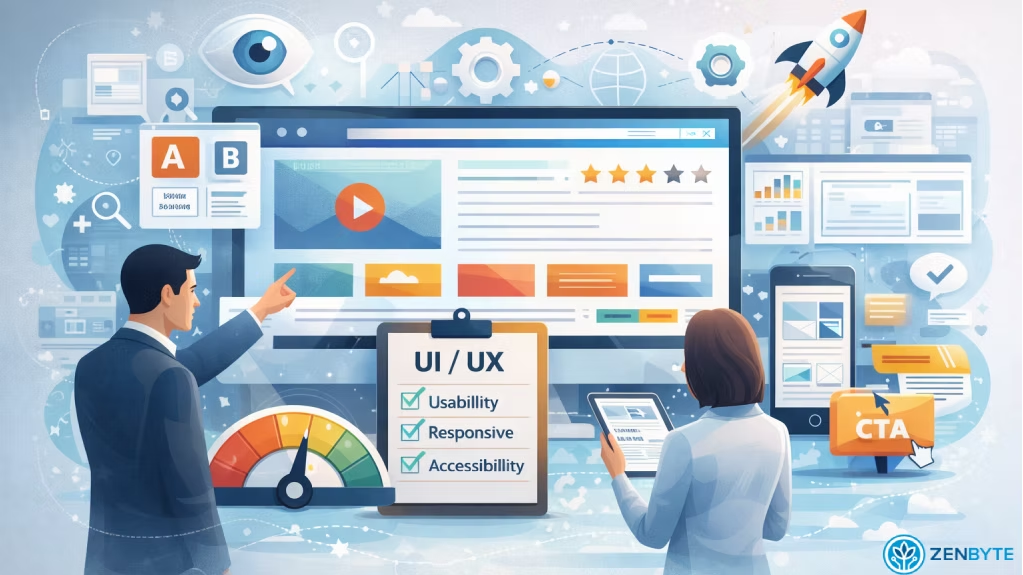
Web Design & User Experience (UX): the strategic foundation for sustainable online growth
Web design and User Experience (UX) are now decisive factors for the success of almost any online presence. Websites no longer compete only with direct competitors, but with every digital experience users are accustomed to. Think of major platforms, fast webshops, and intuitive apps. Expectations are high, and users no longer tolerate slow, confusing, or cumbersome websites.
A website must instantly communicate who you are, what you offer, and what the next step is for the visitor. At the same time, it should feel pleasant, work logically, and inspire trust. This is exactly where web design and UX come together. In this in-depth cornerstone article, we explore these disciplines further and explain why they are essential for long-term online growth.
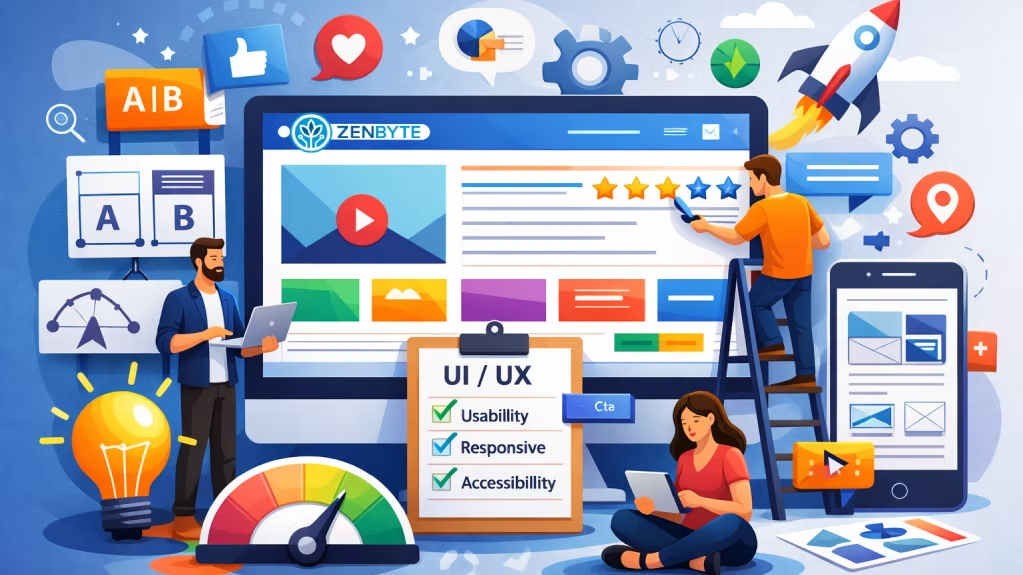
The role of web design in brand perception
Web design plays a crucial role in how a brand is perceived online. Colors, typography, imagery, and layout all contribute to the first impression. Within seconds, visitors form an opinion about the professionalism and reliability of an organization.
Consistent web design strengthens brand recognition and helps visitors feel comfortable more quickly. This applies not only to the homepage, but to every page of a website. A consistent visual style creates clarity and calm, directly contributing to a better user experience.
With professional web design, the balance between visual appeal and functionality is always central, ensuring that design supports content rather than overshadowing it.
User Experience as a guide for design decisions
User Experience goes beyond usability alone. It includes emotions, expectations, and perception. A website can be technically correct yet still feel poor if the UX is not aligned with the target audience.
UX design starts with understanding users: who they are, what they are looking for, and in what context they visit the website. Based on this insight, user flows are designed to be logical and efficient. The fewer steps and the clearer the structure, the higher the likelihood that users will reach their goals.
Good UX also means preventing errors or handling them clearly. Think of understandable error messages, forms that guide rather than frustrate, and feedback that confirms a successful action.
Structure and content as UX building blocks
An important yet often underestimated part of UX is content structure. Clear headings, short paragraphs, and strong call-to-actions make a website scannable and accessible. Online users rarely read word by word; instead, they scan for relevant information.
Web design and UX support this behavior by using visual hierarchy. Headings stand out, important elements get space, and supporting content remains in the background. This helps visitors quickly understand where they are and what they can do next.
Redesign: responding to changing user behavior
User expectations constantly evolve. What felt modern and user-friendly a few years ago may now feel outdated. That is why a periodic website redesign is often essential.
A redesign is not just about a new look. It is a strategic opportunity to analyze user data, identify bottlenecks, and realign the website with current goals and expectations. In many cases, this leads to simplified navigation, improved performance, and higher conversions.
Conversion optimization through UX
UX has a direct impact on conversion. Every moment of confusion, extra click, or delay is a potential obstacle. By applying UX principles, these obstacles are systematically removed.
Conversion-focused UX is about clarity and focus. Visitors need to know exactly what the main action on a page is, without being distracted by unnecessary elements. This does not mean removing information, but presenting it at the right time and in the right place.
Web design, UX, and performance
Performance is a core part of the user experience. Fast loading times contribute to a positive perception and increase the likelihood that visitors stay on the site. Web design plays a key role here by using images, animations, and technical structures intelligently.
A well-designed website does not just feel fast—it actually is fast. Performance optimization is therefore an integral part of modern web design and UX, and it also positively affects SEO.
UX in webshops and digital sales
In webshops, UX often makes the difference between conversion and abandonment. An unclear product overview, complicated checkout, or hidden costs quickly result in lost revenue.
Professional webshop design therefore focuses strongly on usability, trust, and speed. The simpler and clearer the purchasing process, the higher the chance that visitors become customers.
Accessibility and inclusive UX
Accessibility is an increasingly important part of UX. Websites should be usable by everyone, regardless of limitations or circumstances. This is not only socially responsible, but also improves the overall user experience.
By taking accessibility into account, UX becomes more robust and future-proof, while also aligning with growing legal and regulatory requirements.
Web design & UX as a continuous process
A successful website is never truly finished. Web design and UX require continuous attention, analysis, and optimization. By regularly testing, measuring, and refining, a website remains relevant and effective.
Data, user feedback, and technological developments together form the basis for ongoing improvement, allowing a website to evolve alongside both users and the organization.
Conclusion
Web design & User Experience are not separate components, but together form the foundation of a strong online strategy. They determine how a brand is perceived, how easily users achieve their goals, and how effectively a website contributes to conversion and growth.
By investing in professional web design, thoughtful UX, and continuous optimization, organizations create a sustainable digital platform that is ready for the future.